The Surveillance Trap: Why AI Policing Fails Higher Education
When generative AI entered the mainstream, the institutional reflex across higher education and corporate training was swift, defensive, and centered on surveillance. Campuses licensed algorithmic scanners, brought back handwritten blue books, and locked down browser environments. The operating premise was clear: AI is an existential threat to integrity—an adversary to be locked outside the perimeter of legitimate work.
This posture is an expensive dead end. By treating education as the policing of static artifacts rather than the cultivation of mindsets, institutions are preparing learners for an information economy that no longer exists.
The Illusion of Algorithmic Integrity
The detection arms race is mathematically unwinnable. Large language models operate probabilistically, meaning detection heuristics like perplexity and burstiness can be bypassed with minor prompt modifications or light human editing.
Worse, algorithmic detectors systematically misfire, exhibiting high false-positive rates that disproportionately penalize non-native English speakers. Rather than securing academic integrity, detection software turns learning environments into courtrooms. When students and trainees must constantly defend their innocence, psychological safety dissolves—and with it, the appetite for intellectual risk-taking.
Auditing the Artifact: A Broken Proxy
The core failure of surveillance is philosophical. For decades, education used the finished deliverable—the essay, the analysis memo, the standard coding assignment—as an unexamined proxy for learning. We assumed a polished product proved cognitive mastery.
Generative AI broke that proxy permanently. Doubling down on lockdown exams simply confuses the container of thinking with the act of thinking.
As an analysis on Faculty Focus emphasizes, moving from policing to pedagogy requires acknowledging that traditional models mistakenly reward a finished "product" that machines effortlessly mimic. Genuine rigor is only restored when evaluation shifts to the learner's actual inquiry, diagnostic reasoning, and decision-making throughout the process. When we grade only the static output, we grade what machines generate for free.
The Enterprise Blind Spot
For L&D directors and tech executives, the surveillance trap poses an immediate talent risk.
Modern engineering and strategy teams do not ban generative AI; they benchmark their velocity by how effectively teams direct it. Industry does not reward unassisted manual output—it requires professionals who can interrogate synthetic outputs for logical fallacies, detect subtle hallucinations, and guide non-deterministic models toward validated business solutions.
When education retreats to blue books and surveillance software, it trains people for artificial, closed-book scenarios that do not exist in high-performance environments, while leaving them unprepared to audit, direct, and synthesize AI systems at scale.
From Surveillance to Scaffolding: The Maru Labs Approach
Rigor in the age of generative AI does not come from locking the door; it comes from redesigning the room.
At Maru Labs, our core conviction is that forward-looking institutions must abandon the surveillance posture and embed AI directly into learning loops. When treated as an instructional lever rather than an adversary, generative AI allows us to scaffold and assess the exact human capabilities that static curricula have historically struggled to measure:
- Active Interrogation: The discipline of Socratic probing—treating an LLM as an epistemic sparring partner rather than an answer machine. Learners must challenge premises, force counterarguments, and recursively refine queries.
- Discernment: The evaluative judgment required to separate plausible hallucinations from rigorous insight. In an era of infinite synthetic content, the core skill is not production, but the critical validation of accuracy, coherence, and relevance.
- Tolerance for Ambiguity: The capability to operate within probabilistic, non-deterministic problem spaces. Rather than searching for a single predetermined answer, learners must navigate competing hypotheses and imperfect data.
- Dynamic Synthesis: The capacity to orchestrate diverse viewpoints, raw datasets, and AI-generated iterations into an original, cohesive thesis or solution.
In an AI-rich learning environment, the student does not simply hand in a final paper or code snippet. They submit their diagnostic trajectory: the initial hypothesis, the iterative interaction logs, their critique of the machine’s flawed drafts, the evidentiary refutations, and the final synthesis. We grade the architecture of their thought, not the superficial polish of a static document.
Moving Beyond the Panopticon
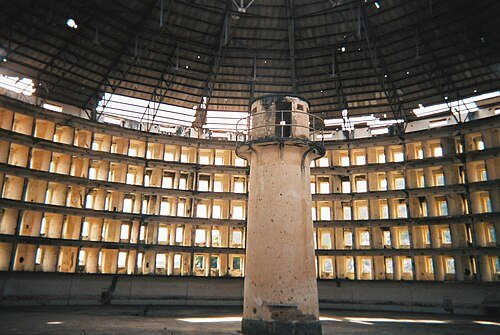

Institutions face a defining fork in the road.
One path leads further into the surveillance trap—escalating software licenses for detection tools, rising friction between educators and learners, and graduates fundamentally ill-prepared for an AI-native economy.
The other path treats generative AI as a catalyst for genuine pedagogical modernization. By shifting focus from policing outputs to scaffolding inquiry, institutions can stop worrying about whether students are "cheating" and start teaching them how to think.
In the next post, we will unpack the mechanics of this shift: how to design learning loops that actively cultivate and measure Discernment, Tolerance for Ambiguity, Dynamic Synthesis, and Active Interrogation in both academic and corporate environments.